Latin Name: Pinnoctopus cordiformis and Macroctopus maorum
Weight: 0.5-17kg average 4.7kg
Length: 50-120cm
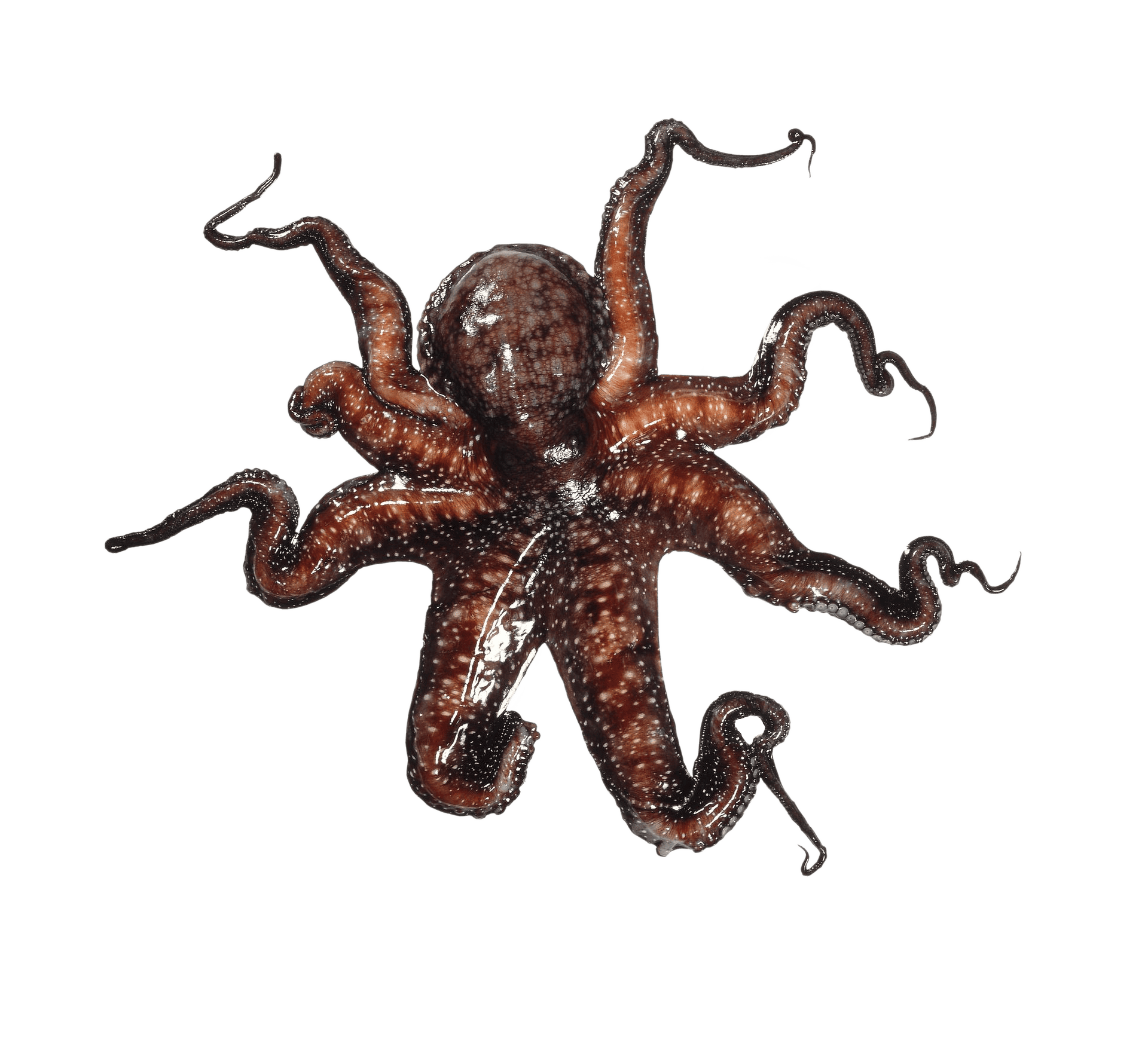
Family: Octopus are highly intelligent marine animals known for their ability to change colour and texture to blend into their surroundings. Two species commonly found in New Zealand waters are the common octopus (Pinnoctopus cordiformis) and the Maori octopus (Macroctopus maorum), the largest octopus species found around New Zealand. These species are important predators that feed on crabs, shellfish and fish.
- Wild Caught
- Farmed
Location
Sustainability
Fishing Methods
Fishing Methods
Fishing Season
-
JAN
-
FEB
-
MAR
-
APR
-
MAY
-
JUN
-
JUL
-
AUG
-
SEP
-
OCT
-
NOV
-
DEC
Nutrition
Source: Vitamin B6, vitamin C, vitamin E, Copper, Iodine, Phosphorus, Potassium, Zinc
Good Source: Niacin (vitamin B3), vitamin B12, Iron, Selenium, Omega-3 fatty acids
Seafood is a highly nutritious food and is a great source of protein. Many species are low in saturated fat and a number of them are a good source of Omega 3.
Did you know?
Many octopuses are able to escape danger by releasing a squirt of obscuring ink as they zoom away on a jet of water. Within their ink sacs, they produce melanin, the same dark pigment that’s in our hair and skin.
Cooking Tips
Octopus has a mild flavour and a distinctive texture that is both smooth and firm. Traditionally, octopus is tenderised before cooking to enhance its tenderness while retaining its characteristic bite. Suitable
- Barbecuing
- Frying
- Grilling